
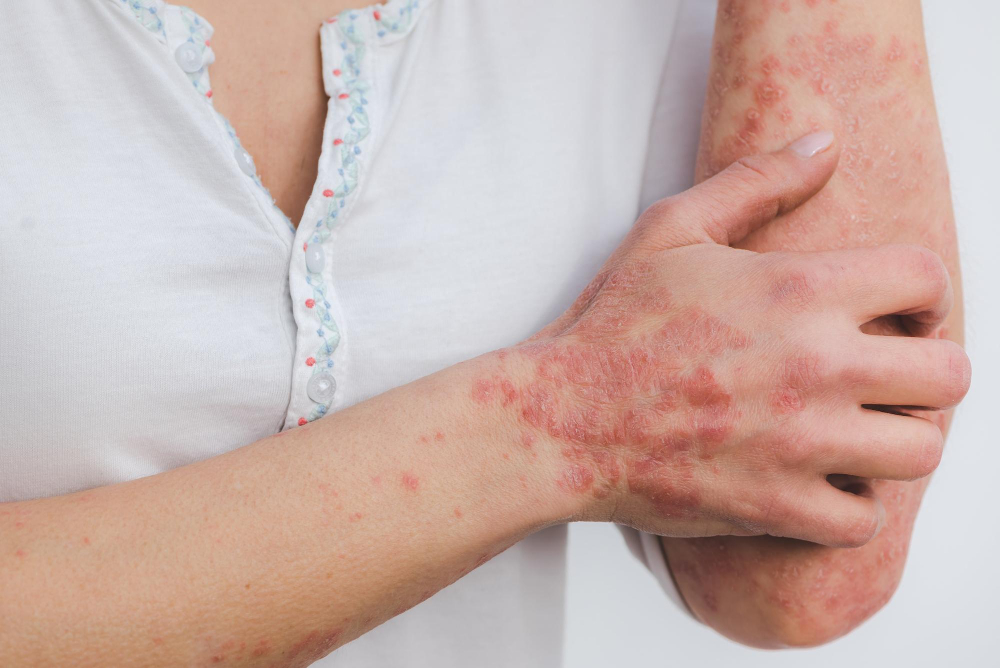
What is Psoriasis?
Psoriasis is a long-term skin condition. It causes red, scaly patches on the skin. These patches can be itchy or sore. Ayurveda for Psoriasis offers a natural way to manage this condition. In Ayurveda, psoriasis is seen as an imbalance in the body’s natural energies, called doshas. While modern medicine sees psoriasis as an immune system problem, Ayurveda looks at the whole person. This includes mind, body, and lifestyle.
Common Symptoms of Psoriasis
Psoriasis symptoms can vary from person to person. However, some signs are more common. Early detection helps in better management. Look for these symptoms:
Sometimes, symptoms get worse during cold weather or after stress. For many, symptoms come and go in cycles.
Causes and Risk Factors (with Ayurvedic Perspective)
Doctors do not know the exact cause of psoriasis. However, both genetics and the immune system play a role. In Ayurveda, psoriasis is linked to an imbalance in the doshas, mainly Vata and Kapha. This imbalance can cause toxins, called ama, to build up in the body. These toxins may affect the skin.
Common risk factors include:
In Ayurveda, poor diet, irregular routines, and emotional stress can also trigger symptoms.
Ayurvedic Diagnosis Methods
Ayurvedic doctors use a holistic approach to diagnose psoriasis. First, they check your skin and ask about your symptoms. Next, they assess your dosha balance. They may also ask about your diet, lifestyle, and stress levels. Sometimes, they check your tongue, pulse, and eyes. This helps them find the root cause of your skin problem.
Ayurvedic Treatments and Remedies for Psoriasis
Ayurvedic treatment for psoriasis aims to balance the doshas and remove toxins. Treatments are natural and focus on the whole body. Some common Ayurvedic remedies include:
Always use these remedies under the care of a qualified Ayurvedic practitioner. Some herbs may not suit everyone. For example, certain oils may cause allergies in sensitive skin.
Lifestyle and Dietary Guidance in Ayurveda
Ayurveda for Psoriasis also focuses on daily habits. Healthy routines can help manage symptoms. Here are some tips:
In addition, regular exercise and sunlight can improve skin health. However, avoid harsh soaps or hot showers, as they may worsen dryness.
Prevention Tips and Home Care
While psoriasis cannot always be prevented, you can lower your risk. Try these home care tips for natural remedies for psoriasis:
For many, small changes in daily life make a big difference. However, always check with your doctor before starting new remedies.
When to Seek Professional Help
Sometimes, home care is not enough. If your symptoms get worse or do not improve, seek help. Also, if you notice joint pain, swelling, or signs of infection, contact a doctor. Early treatment can prevent complications. For the best results, consult a qualified Ayurvedic practitioner for personalized psoriasis care.